iCaur 03T, from R639 900
We looked at the funky little V23 a few weeks ago — now it's time for the big brother. The iCaur 03T is bigger, faster, and more expensive. Here's every spec, every trim difference, and how it's been received around the world.
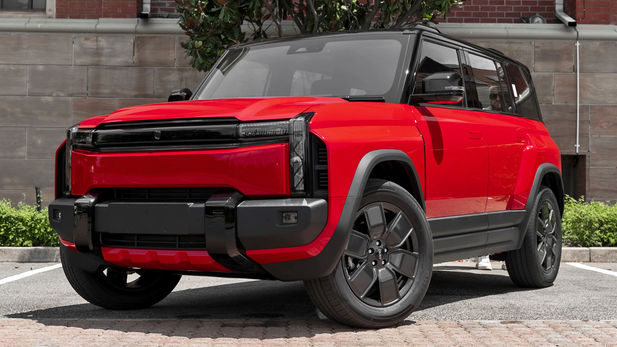
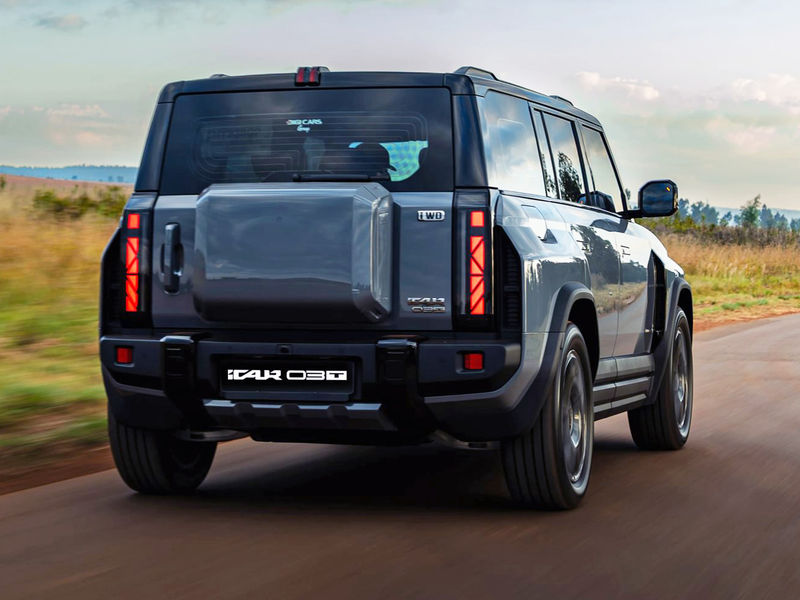
The iCaur 03T — the brand's flagship electric SUV, positioned above the V23.
Bigger, faster, and with serious international pedigree
The iCaur 03T is the second model from iCaur — Chery's new "new-energy" lifestyle brand — and it sits above the retro-styled V23 we've already covered. This one has travelled the world already, just under different badges. It started life in China as the iCar 03T, and has been sold abroad as the Jaecoo J6, the Chery X3 Plus, and under several other names across Southeast Asia and beyond. If you're wondering why it looks like it borrowed some DNA from a Land Rover Defender, that's not a coincidence — Chery has a joint venture with Land Rover in China. The 03T went on sale in South Africa on 28 May 2026, sized to go up against the likes of the Toyota Corolla Cross.
2WD vs AWD
A R60 000 step up between trims — a meaningful jump over the entry-level V23, which starts at R519 900.
Battery size, claimed range, and what to expect in the real world
Both trims use LFP batteries — good for longevity and thermal stability. The 2WD gets a 65.69 kWh pack for a claimed 431 km on the NEDC cycle, while the AWD steps up to 69.77 kWh for a claimed 436 km NEDC. Energy consumption is rated at 18.3 kWh/100km for the 2WD and 19.9 kWh/100km for the AWD.
A big performance gap between trims
The 2WD runs a single rear-mounted motor producing 135 kW and 220 Nm, good for a 0–100 kph time of 10.5 seconds. The AWD adds a second motor up front for a combined 205 kW and 385 Nm — dropping 0–100 kph to a genuinely quick 6.5 seconds. Top speed is electronically limited to 150 kph on both. Drive modes scale with trim too: the 2WD gets Eco, Normal, Sport and Custom, while the AWD adds Slippery, Beach, Muddy, Bumpy and All-Road modes.
AC and DC charging
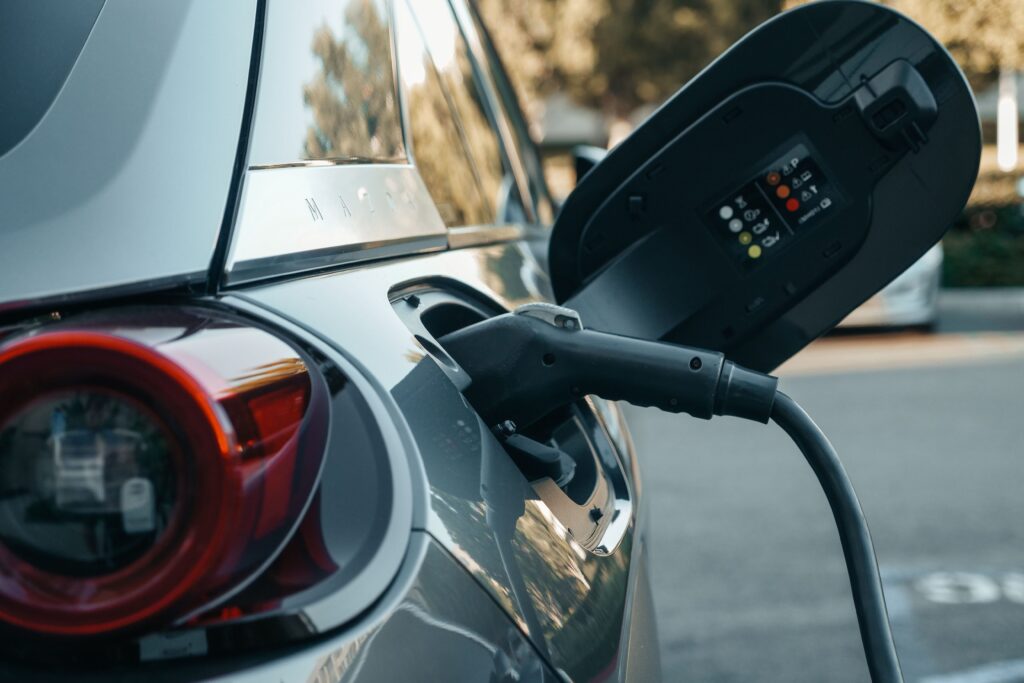
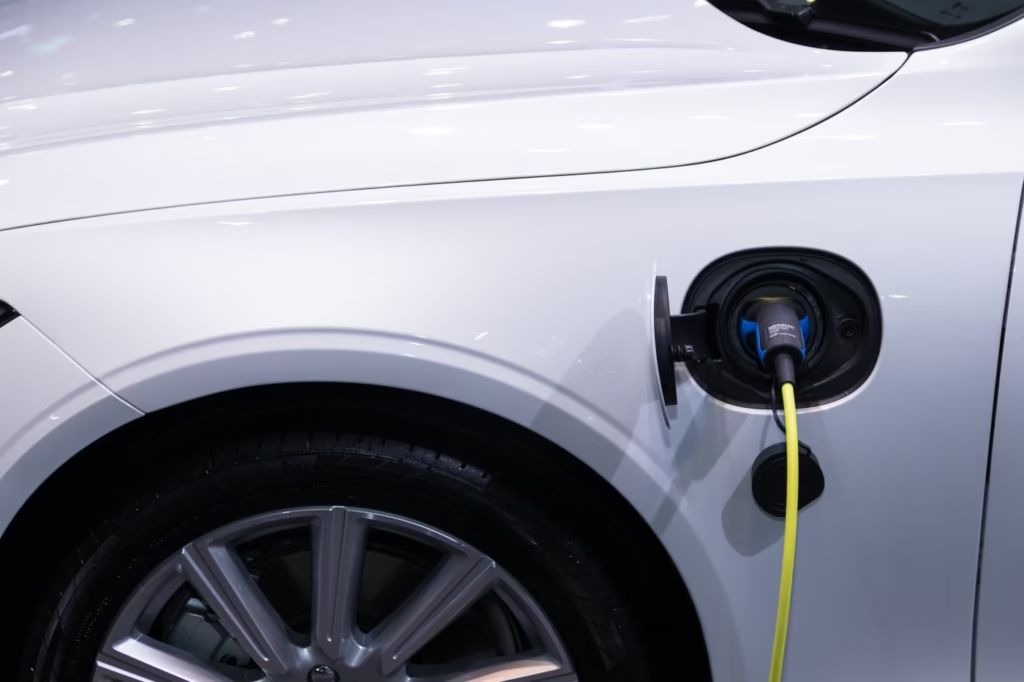
Identical across both trims. AC home charging tops out at 6.6 kW — on the slower side for this price bracket, so a full charge from a home wallbox will take roughly 10–11 hours. DC fast charging is quicker: the 2WD tops up 10–80% in around 30 minutes, while the AWD — despite the larger battery — is rated slightly slower at 42 minutes for the same window, likely down to battery management under the added thermal load of the dual-motor setup. Both support V2L (vehicle-to-load) at 3.3 kW for running external appliances.
What both trims offer, and what the AWD adds
Both trims (standard)
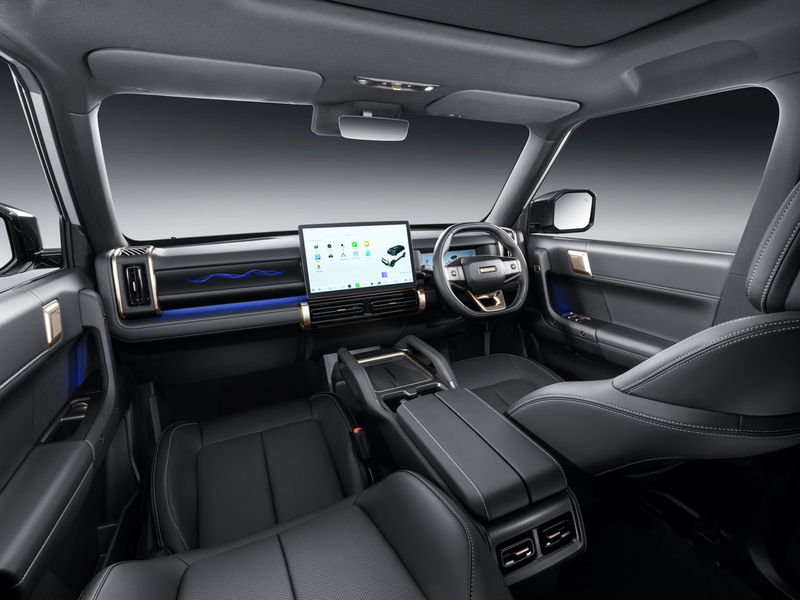
Shared equipment- 15.6-inch touchscreen, wireless CarPlay & Android Auto
- 9.2-inch digital instrument cluster
- Automatic climate control
- Black leather upholstery
- Heated & ventilated front seats
- Panoramic sunroof with anti-pinch
- 50W wireless phone charging
- 540-degree surround camera
- Full ADAS suite, 6 airbags
AWD adds
+R60 000 over 2WD- Second electric motor — 205 kW / 385 Nm combined
- 12-speaker Infinity sound system (vs 8-speaker)
- Front seat massage function
- 4-way power-adjustable driver lumbar support
- Electrically adjustable passenger leg rest
- Extra off-road drive modes
iCaur 03T spec sheet
Powertrain & battery
| Motor layout (2WD) | Single motor, rear-wheel drive |
| Motor layout (AWD) | Dual motor, all-wheel drive |
| Power (2WD) | 135 kW / 220 Nm |
| Power (AWD) | 205 kW / 385 Nm combined |
| 0–100 kph (2WD) | 10.5 seconds (claimed) |
| 0–100 kph (AWD) | 6.5 seconds (claimed) |
| Top speed | 150 kph (both) |
| Battery (2WD) | 65.69 kWh LFP — 431 km claimed (NEDC) |
| Battery (AWD) | 69.77 kWh LFP — 436 km claimed (NEDC) |
| Energy consumption (2WD / AWD) | 18.3 / 19.9 kWh per 100 km |
Charging
| AC charging | 6.6 kW |
| DC 10–80% (2WD) | ~30 minutes |
| DC 10–80% (AWD) | ~42 minutes |
| Vehicle-to-load (V2L) | 3.3 kW |
Dimensions & practicality
| Length | 4 433 mm |
| Width | 1 916 mm |
| Height | 1 741 mm |
| Wheelbase | 2 715 mm |
| Ground clearance | 225 mm |
| Boot space | 450 litres (1 238 litres, seats folded) |
| Extra storage | 40-litre box in side-opening tailgate |
| Front storage (frunk) | None — rear/front motor layout leaves no frunk |
| Body construction | All-aluminium unibody — 30%+ lighter, 30-year corrosion resistance claimed |
Interior & tech
| Touchscreen | 15.6-inch, wireless Apple CarPlay & Android Auto |
| Instrument cluster | 9.2-inch digital |
| Audio (2WD / AWD) | 8-speaker / 12-speaker Infinity |
| Wireless charging | 50 W |
Safety
| Airbags | 6 (dual front, front-side, curtain) |
| ADAS | Adaptive cruise, lane keep assist, blind-spot detection, automatic emergency braking, forward collision warning |
| Camera | 540-degree surround view, front & rear park sensors |
| Child seats | ISOFIX anchors |
Warranty & ownership
| Vehicle warranty | 8 years / 200 000 km |
| Battery warranty | 8 years / 160 000 km (first owner) |
| Service plan | 5 years / 100 000 km |
| Roadside assistance | 8 years / 200 000 km |
What stands out, and what to watch for
Strengths
- Strong standard equipment, even on entry trim
- AWD's 6.5s 0–100 is genuinely quick for the class
- Comprehensive 8-year warranty package
- Distinctive, rugged styling
- Aluminium construction is a real engineering talking point
Drawbacks
- NEDC range needs a real-world discount
- 6.6 kW AC charging is slow for the price bracket
- No frunk
- Brand-new nameplate in SA, no long-term track record yet
- R60 000 AWD premium is steep if performance isn't a priority
How the 03T has been received internationally
This isn't a car built specifically for South Africa — it's already had a life on the world stage under different badges. In China, it launched as the iCar 03T. In Singapore and several Southeast Asian markets it's sold as the Jaecoo J6, where reviewers have generally responded well to the design, with more than one comparing it favourably to the Land Rover Defender and Mercedes G-Wagen. It's also on sale or confirmed for launch in Malaysia, Indonesia, Thailand, the Philippines, and Australia — where Chery specifically cited the platform's suitability for longer-distance driving. The consistent thread across markets: strong design, a cabin that feels more premium than the price suggests, and the caveat that it's still a young brand building up its reputation and dealer network.
Full walkaround & review
↑ This video is now linked directly to the ChargeGoEV YouTube review.
Common questions
Watch the full review
We put the iCaur 03T through its paces on the ChargeGoEV channel — price, specs, real-world range, and everything in between.