The big question — how do you actually charge an electric car?
Three-pin plug, 7 kW wallbox, or public DC charger? Here is what every option means for everyday South African life.
When I first started learning about EVs I thought charging would work exactly like petrol — you drive, you stop at a garage, you fill up litres and you are done. I had to shift my mind. With an EV you do not have to go to a station every time; you can charge at home. That changes how you plan and live with a car, and that is what this post is about.
⚡ How energy is measured — and what it means for driving
The way to measure EV energy is not in litres but in kilowatt-hours (kWh). A kilowatt-hour is the standard unit of energy for electricity and it tells you how much energy the car uses. Knowing kWh and your car’s consumption helps you work out how far a charge will take you and how much it will cost.
🔌 The three ways to charge your EV

The first is the three-pin plug. Every electric car comes with one. You plug it into a normal wall socket — the same socket you use for your kettle. It delivers around 2.4 kW, which means a 30 kWh battery takes twelve to fifteen hours to charge from empty to full.
Best for emergency top-ups or if your daily driving is under 40 km. Tip: never use an extension lead — plug directly into a properly installed wall socket.
- Works anywhere with a socket
- Zero installation cost
- Comes free with every EV
- Very slow — 12 to 15 hours
- Not practical as your daily option
- Never use an extension lead

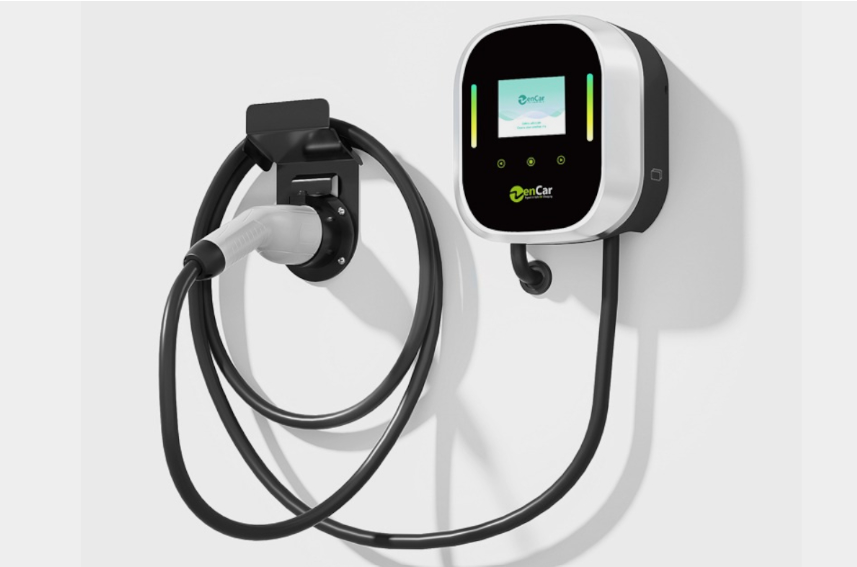
This is my personal favourite. Some dealers throw one in for free. A wallbox charges your car much faster — typically five to six hours for a full charge depending on your car. Get a qualified electrician to install it properly.
Some cars even have an app where you can schedule charging to start at midnight when rates may be lower and stop automatically when full. You wake up every morning to a full battery — you never visit a petrol station for daily driving again.
- Full charge in 5 to 6 hours overnight
- Schedule charging for off-peak rates
- Most small EVs fully charge overnight
- Upfront purchase and installation cost
- Needs a qualified electrician
- Not always included free by dealers

Public chargers come in AC (slow) and DC (fast) varieties. For quick top-ups or long trips you want DC fast chargers. Platforms like PlugShare, GridCars, Rubicon, and Chargify show you where every charging station in South Africa is. Download PlugShare — it is free and shows live availability.
AC public chargers run at eleven to twenty-two kilowatts. DC fast chargers go from fifty up to one hundred and fifty kilowatts depending on your car.
- Fast charging on the go
- Essential for longer trips
- Growing network across SA
- 2.5× more expensive than home charging
- Not all areas well covered yet
- Relies on network availability
💰 What does it cost? A quick comparison
Using a 30 kWh battery — similar to the BYD Dolphin Surf — as an example:
| Charging method | Rate (approx) | Full charge cost | Time |
|---|---|---|---|
| 🏠 Home — wall plug Cheapest | ~R2.72/kWh | ~R82 | 12–15 hrs |
| 🏠 Home — 7 kW wallbox Best value | ~R2.72/kWh | ~R82 | 4–5 hrs |
| 📡 Public AC charger | ~R6.00/kWh | ~R180 | 3–5 hrs |
| ⚡ Public DC fast charger | ~R7.35/kWh | ~R221 | 20–40 min |
📋 Real-world charging behaviour and etiquette
Most people with short daily trips do not need to charge every night. If your daily driving is under 60 to 80 km, you might only need to charge a few times a week. DC fast charging fills the battery quickly but is best used sparingly to save cost and reduce battery stress over time.
- Charge between 20% and 80% daily
- Plug in overnight — set and forget
- Only charge to 100% before long trips
- Ask before using a friend’s socket
- Download PlugShare before any road trip
- Waiting until the battery hits 0%
- Charging to 100% every single day
- Relying only on public DC chargers
- Using extension leads on wall plug
- Leaving on DC fast charge when full
✅ The bottom line
Thank you for reading. Hope this guide helped you. There will be more posts where I break down specific models, charging costs, and budgeting tips. Let us take this journey together and see how an EV could fit into our lives.
🔧 Try it with your own numbers
Use the free tools on LetsChargeSA to calculate your exact charging costs:
📌 Electricity rates based on 2025/26 Gauteng municipal average (~R2.72/kWh). Public charging rates based on Rubicon/Chargify typical 2026 pricing (~R7.00–R7.35/kWh). Rates vary by municipality and network. | LetsChargeSA · 2026